Balance and spring inspection
The door is disconnected from the opener and moved by hand to see whether the springs still carry the weight. Springs are inspected for gaps, rust and wear, and are never adjusted as a do-it-yourself item.
A garage door that is checked once a year usually fails on a schedule you choose rather than on a Tuesday morning with a car behind it. A tune-up by an independent provider goes over the whole door, tightens what has worked loose and should show you which parts still have life left.
Phoenix garages are hard on doors in a way that is easy to miss. The metal sits in a room that reaches well above outdoor temperatures on a July afternoon, factory grease thins out and dries, and monsoon dust settles into every hinge and track it can reach. Nothing fails on the day it happens; it just gets slowly worse.
Balance is the part owners never see. A door should hold its position roughly halfway up on its own. When the springs weaken, the opener quietly takes up the difference and wears out early, and that is the failure that costs the most.
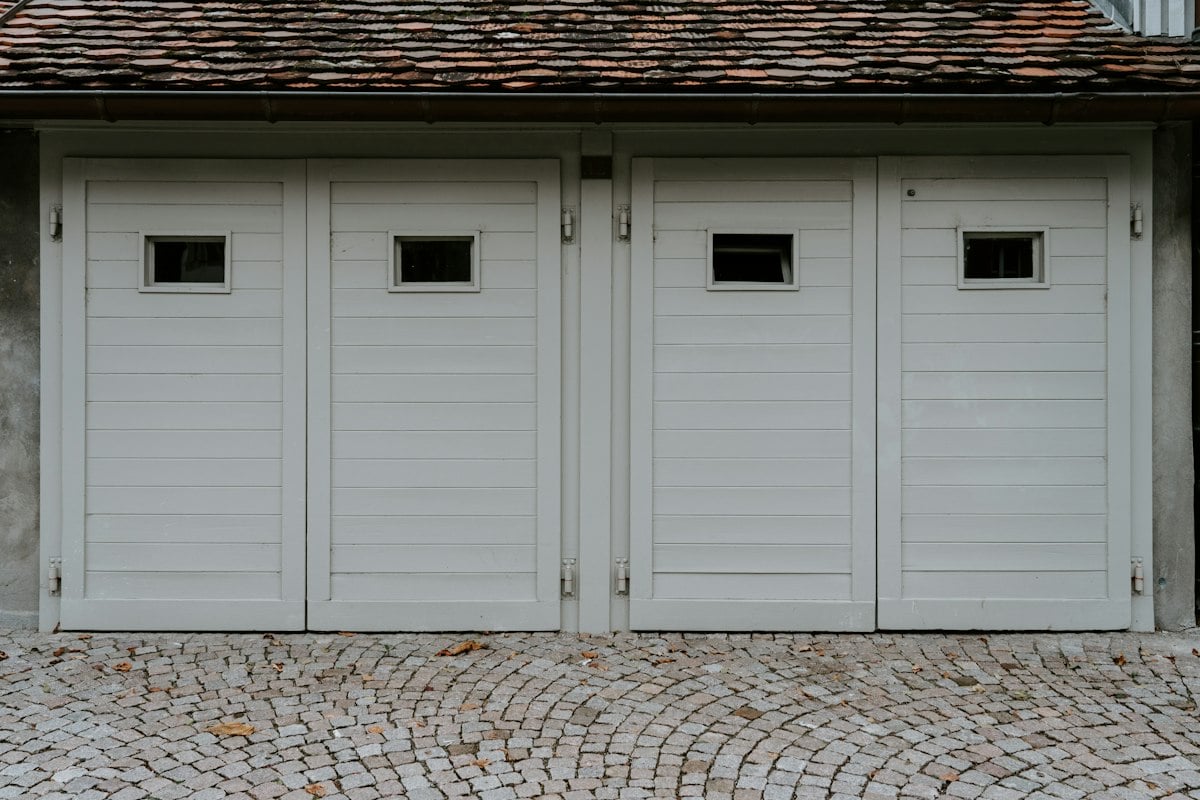
A tune-up is a full pass over the door, not a spray-and-go visit. Ask the provider to show and quote anything found worn before it is replaced.
The door is disconnected from the opener and moved by hand to see whether the springs still carry the weight. Springs are inspected for gaps, rust and wear, and are never adjusted as a do-it-yourself item.
Hinges, brackets, track bolts, the bottom fixtures and the opener rail all loosen as the door cycles. They are checked for elongated holes as well as loose fasteners, because a worn hole needs more than a wrench.
Tracks are cleaned of packed grit, checked for dents and spacing, and rollers and bearing plates are turned by hand to find the ones that have stopped rolling and started dragging.
Moving parts are lubricated with a product meant for a hot, dusty garage. General household spray attracts dust and evaporates quickly, which is why doors often get louder a few weeks after a home lubrication attempt.
The bottom seal, side stops and top seal are checked for hardening and gaps. A worn bottom seal lets in blown dust, runoff during a monsoon downpour and the occasional scorpion or other pest looking for shade.
Travel limits, force settings, the safety reverse and the photo eyes are all tested, and the result is demonstrated in front of you rather than described.
Most owners book a tune-up once a year. A door used as the household's main entrance, a three-car door that runs many times a day, or a home that stands empty through the summer while the owners are away are all fair reasons to look at it more often.
A tune-up is also the sensible first step when something already feels wrong but nothing has broken. If a problem is found, the visit turns into the relevant repair, whether that is spring repair, cable and roller repair or opener repair. Faults on the control side are handled under sensor and keypad repair.
Where maintenance keeps finding the same tired parts on an old door, the honest conversation is the repair versus replacement comparison rather than another year of patching. Businesses with high-cycle bays should look at commercial door service, where a maintenance schedule matters far more.
Tune-up referrals cover the valley, including Laveen and the rest of the service areas. See how a visit is arranged or call to ask.
Once a year suits most homes, and more often for a door that opens and closes many times a day. Heat and blown dust are the reason the interval here is shorter than a manual written for a milder climate suggests.
Some of it, safely. Wiping the tracks, checking the bottom seal and testing the safety reverse with a solid object on the floor are all fine. Springs, cables and anything under tension are not: they hold enough energy to injure badly, so leave those to a technician.
It depends on the door size, the number of doors and whether worn parts are replaced during the same visit. Ask the independent provider to inspect first, show you what it found and quote any replacement before doing the work.
Usually, if the noise comes from dry rollers, loose hardware or grit in the track. Noise from a failing opener gear, a worn bearing or a damaged section needs the matching repair instead, and you will be told which it is.
Call and describe what the door is doing so a provider can plan the next step.